Bus seat plans for group tours: seat maps, couples and pricing
Bus seat maps for 2+2, 1+2 and 2+3 layouts, couple and front seats, keeping families together and never selling a seat twice: a guide for travel agencies.
3 min read
On a group tour, seats cause more trouble than anything else: who gets the front, whether a couple sits together, and the same seat promised to two people. The fix is simple: draw the bus seat plan before you take a booking, tie every seat to a named traveler on a booking, and tell travelers your seating rules up front.
Start from the bus layout
Ask the bus company for the coach's layout. On group tours in Bangladesh you mostly meet:
- 2+2: two seats each side of the aisle. The usual AC coach.
- 1+2: one seat on one side, two on the other. More comfortable, fewer seats, so a higher bus cost per traveler.
- 2+3: more seats, less comfort. For budget packages.
Many coaches have five seats in the back row, and the seat by the driver usually goes to the guide or tour leader. The seats left after those are the tour's real capacity — price the tour on that number, as shown in How to price a group tour.
Name every seat: A1, B2, C3
Give each seat a name — a letter for the row, a number for the column (front row A1, A2, A3, A4). If the bus company numbers its seats, use theirs so nothing gets mixed up on the day. The same name goes on the ticket and the traveler list.
Settle the seating rules first
Write these on the tour's page before anyone asks:
- First paid, first seated: whoever pays the advance first picks first. A seat promised on the phone is not held.
- Booked together, seated together: travelers on one booking get seats next to or near each other.
- Couples and women travelling alone: seat couples together, and don't seat a woman travelling alone beside a man she doesn't know — nearly every traveler in Bangladesh expects it.
- Changing seats: until how many days before departure a seat can be changed.
Front seats and couple seats: charge more?
Front rows are smoother and have the view, and many travelers will pay for them. Two ways to handle it:
- One price, front seats to early bookers: simple, and a reason to pay the advance early.
- A premium for the front: more profit, more bookkeeping. If you do it, make it a separate package ("front seat") so the price stays with the booking. How that changes the break-even: pricing each package.
A couple package usually costs more because of the private hotel room; on the bus, give them two seats side by side.
Never sell the same seat twice
Double-selling happens when the seat list lives in several places: the office ledger, one staff member's phone and the Facebook page's messages. To prevent it:
- Keep one seat list that the whole team sees at the same time.
- Write the name when you give the seat, not "Rahim + 3".
- Free a cancelled seat at once, or the bus leaves half empty while the list says full.
Hotel rooms work the same way
Treat the hotel like the bus: how many beds in each room, and who sleeps where. Couples, families and friends on one booking in the same room — settled in advance, there is no argument over rooms at check-in.
For departure day
Give the tour leader the traveler list by seat — seat, name and mobile number. A ticket with each traveler's seat on it makes boarding quicker.
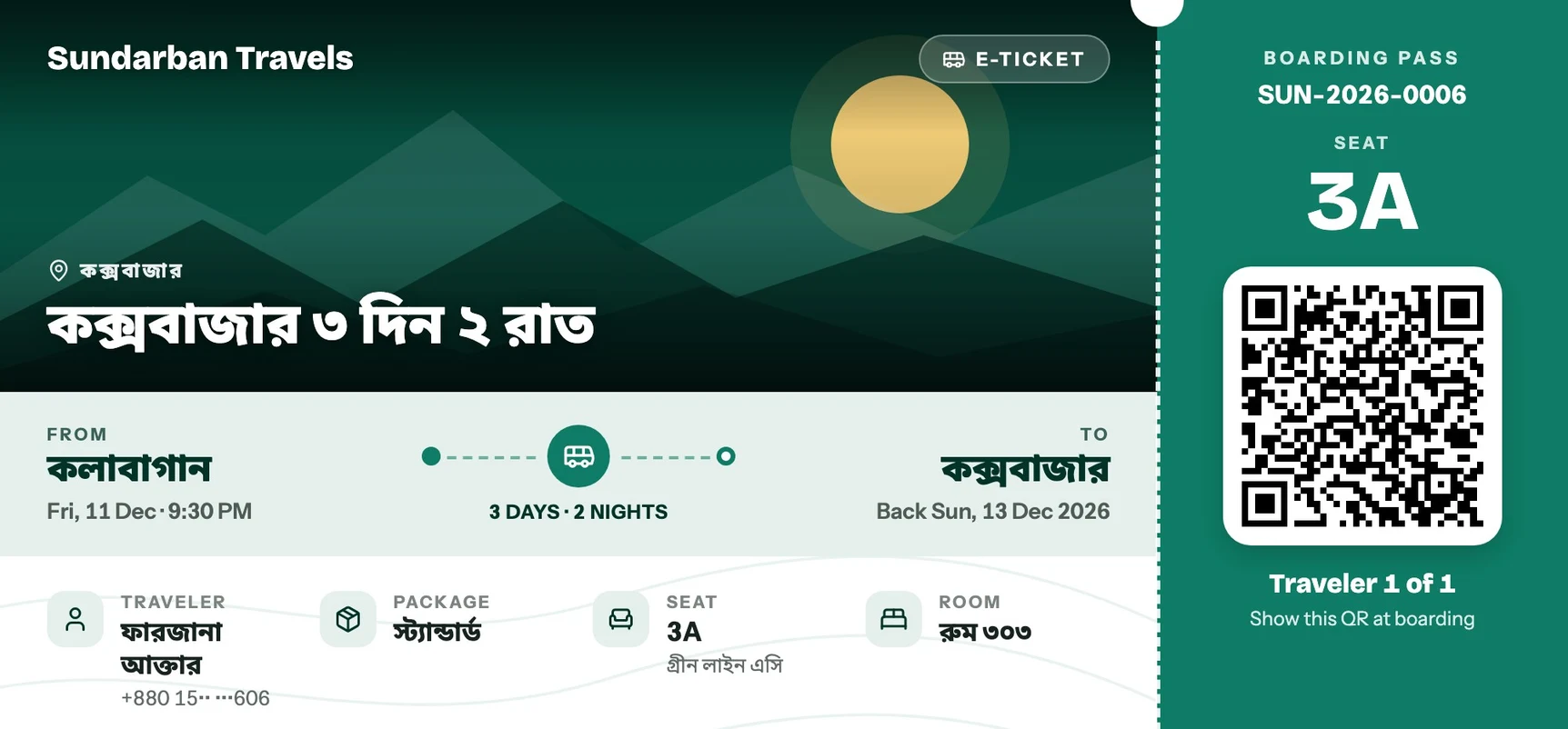
In Indoor Travels you set each bus's layout (2+2, 1+2, 2+3 or your own) and each hotel's rooms and beds. Even when travelers book online, each seat goes to one traveler only — even if two people try for it at the same moment. Every traveler's ticket carries their seat, room and a QR code. See the features.
Run your agency’s group tours from one panel
A booking website, seat maps, bKash/Nagad advances and the profit of every tour — start on the free plan, no card needed.
Open your agency free